
Folk and national songs and dances of Armenia have always been a source of pride for our nation. The ancient clothes, shoes, dance movements, positions, they all have a history of centuries. In our school, folk dance is not new, the educational complex has been teaching it since its creation. All schoolchildren, starting from the first grade, have both dance and song once a week in their agenda and class schedule.
The approach of the educational complex in this case is unique, because from Monday to Friday the students sing and dance in the morning hours, folk and national songs, which have been unfortunately forgotten in almost all public schools of Armenia. It is a bit strange and somewhat offensive, because Armenia has a really rich, priceless and endless history and culture, being considered one of the oldest ethnic nations.
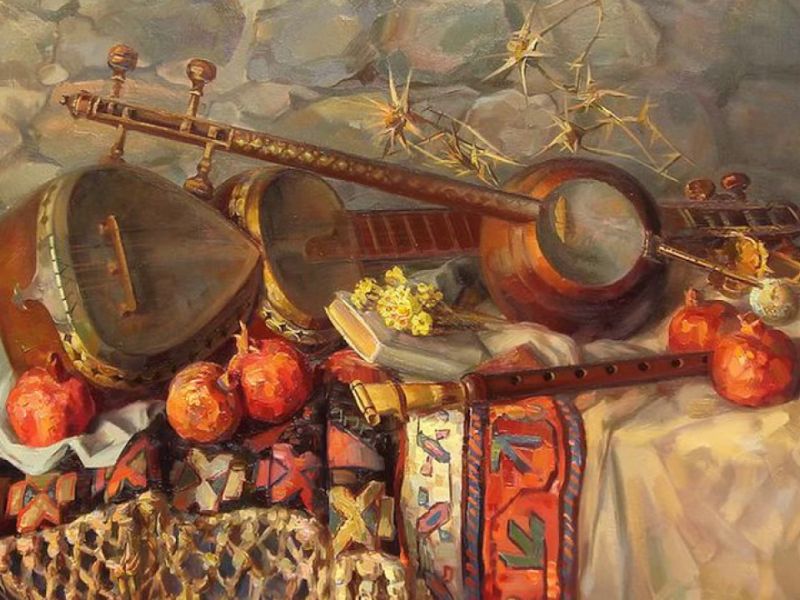
During dance and song lessons, we sing national songs, which is actually not a surprising phenomenon. However, those national songs have their roots in the past, centuries ago. The clothes of the people, the style and form of dancing, the movements, they were all created and developed over the centuries. There are also songs and dances that have been accurately restored in our age thanks to technology.
I love the early songs and dances, especially “Vana the Fisherman“, “Taltala“, “Komitas’s Shoror“, which is one of his unique works that became a dance, Alashkert’s and Karno’s Kochar dances, 12 and 8 foot dances, etc. Of course, all national songs and dances are beautiful, each one is unique, unrepeatable, unforgettable and of course harmonious and appropriate for the nation. I am definitely glad that the educational complex is taking measures to preserve the culture. Certain projects are currently being developed and prepared in the educational complex, among which are, for example, the restoration of songs and dances, as well as the joint performance of songs and dances. Every Friday at 3:15 in the marble hall in the middle of the middle and high schools there are media-Fridays, the main purpose of which is to show how each school is preparing for it. We have visitors from different nations, for example, a few weeks ago our Georgian friends visited us, who showed and presented their centuries-old culture in the form of dances.


Thus, we only understand that culture, in the case of national and folk songs and dances, is a part of our school routine. We learn them from an early age, we are educated correctly and according to Armenian. I think it is right that the school has a big role in all of this, but I am saddened that only our school is prone to it, “suffers” from that pain. All the other schools just don’t pay enough attention to this important issue, which is really sad.
 Դավիթ Մուրադյան