
Today in the world, and in particular in Europe, the Day of European Languages is celebrated, and on this occasion a meeting-discussion was organized in the “Mkhitar Sebastatsi” high school-research college, which was conducted by the students of the 12th grade.
About the project you can read in Nune Aydinyan’s blog, also you can see the students’ presentations.
The European Day of Languages celebrates the wealth of languages coexisting in Europe and beyond. It is estimated that there are over 225 indigenous languages in Europe, without even including languages that have arrived on the continent through migration.
According to Levon Sahradyan, the meeting started. He told about the languages used in the territory of the European Union, how these languages are distributed. An important reference was made to regional languages and language families.
It should be specially noted that, as an independent branch of the Indo-European language family, Armenian had stages of development. Levon made important references, spoke about the attitude of Armenians in the Diaspora towards their native language, and also focused on the cultural factor, that is, how the Armenian language developed, how the first printed books were published, for example “Urbatagirk” by Hakob Meghapart.
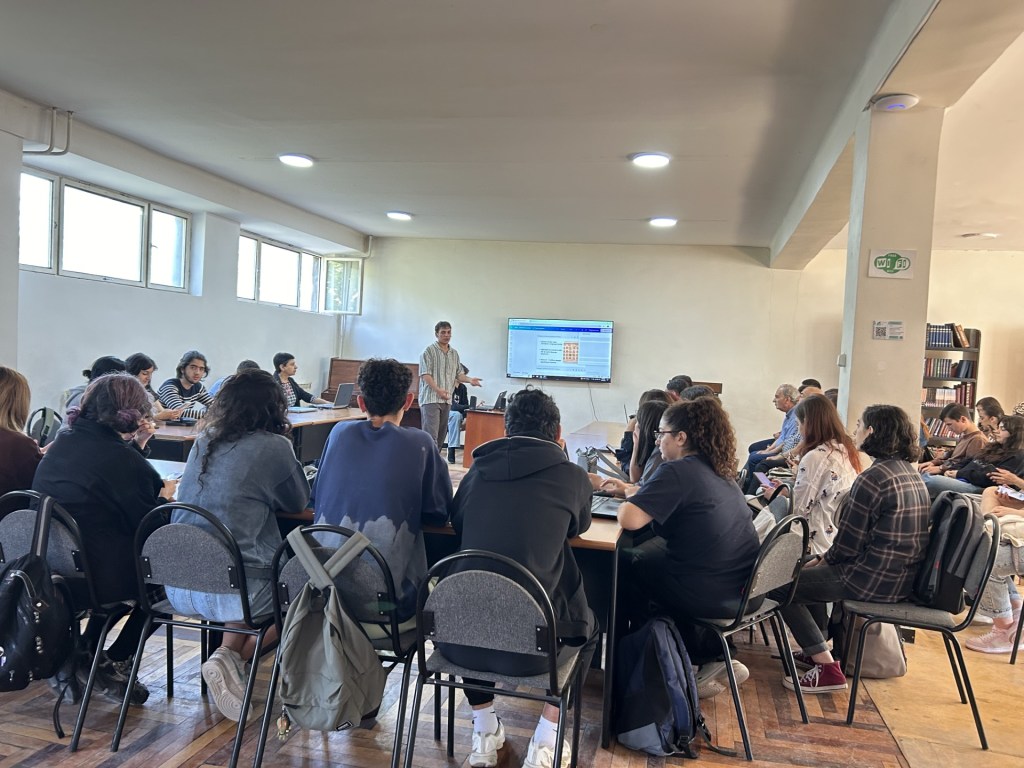
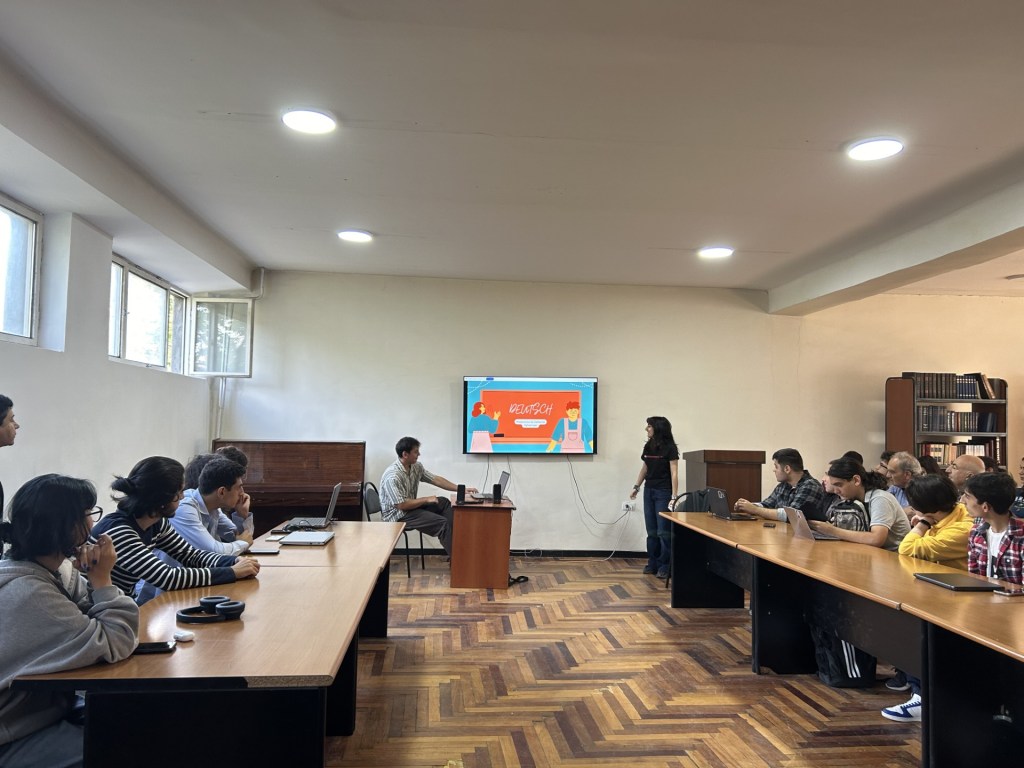
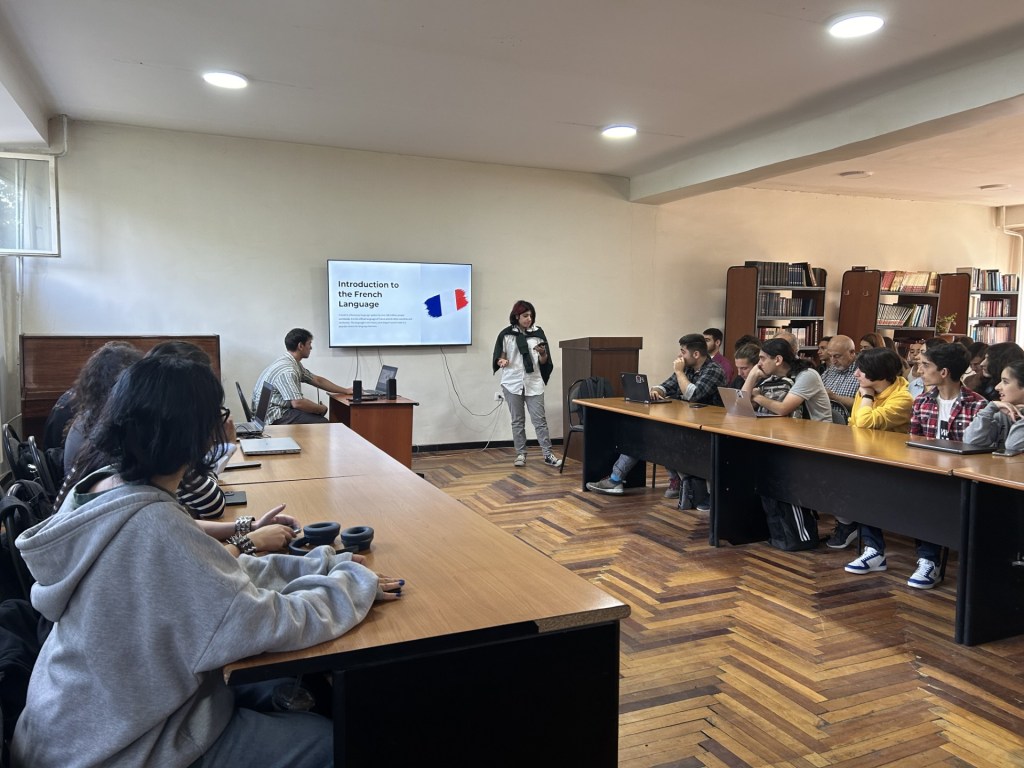
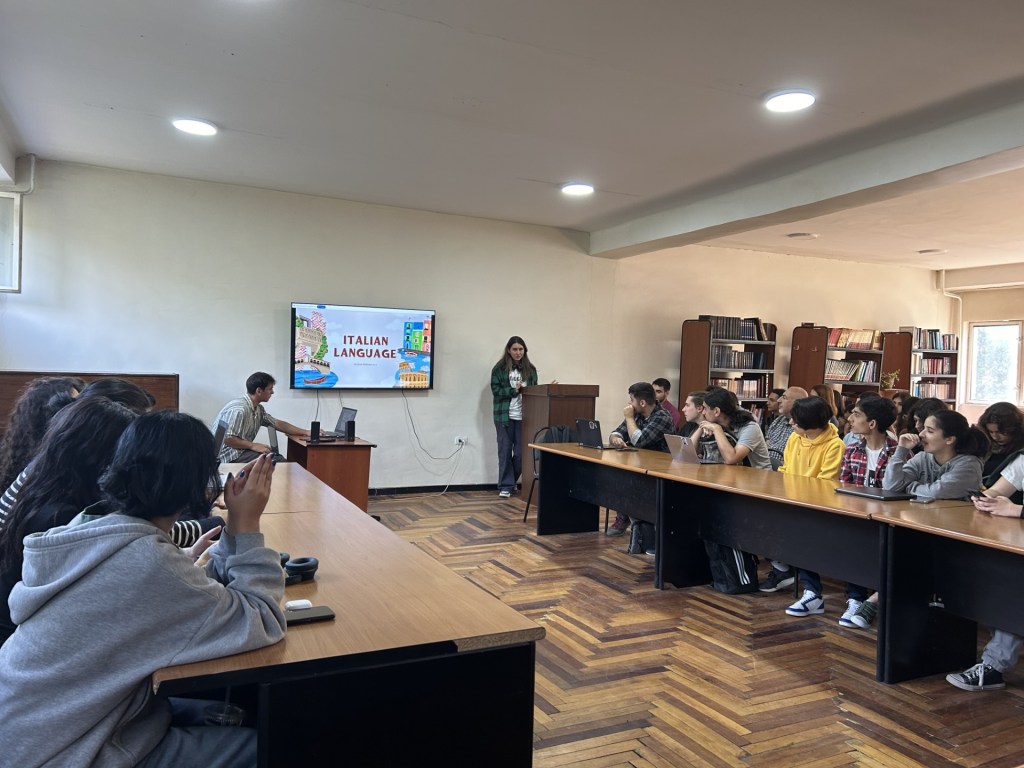
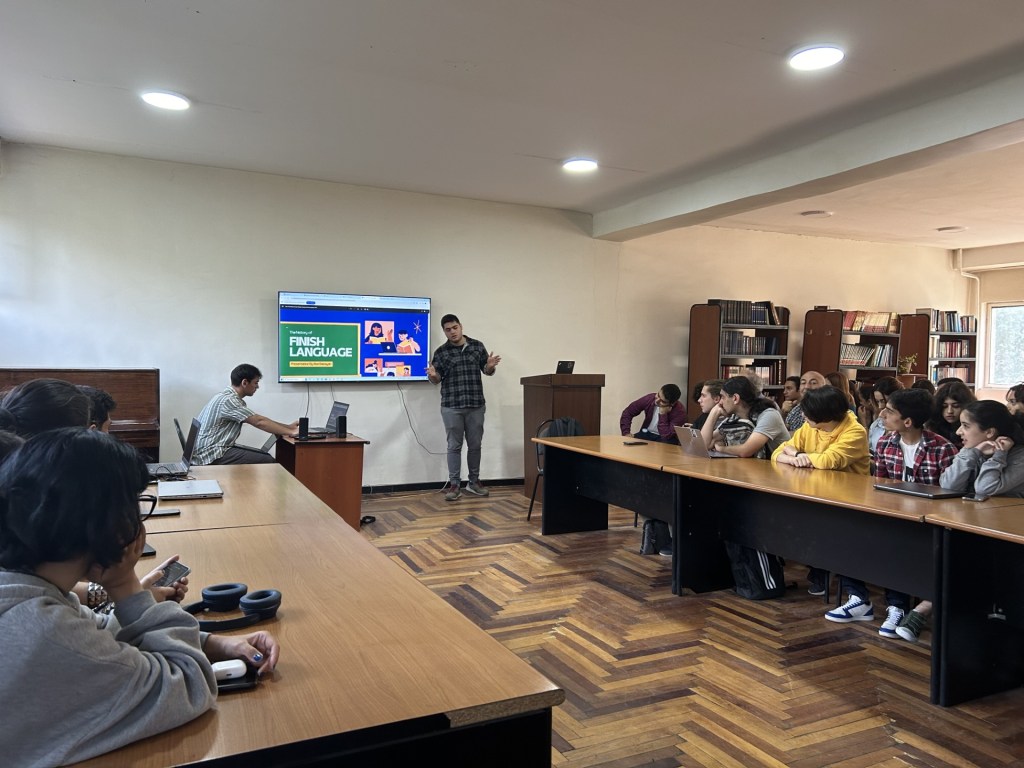
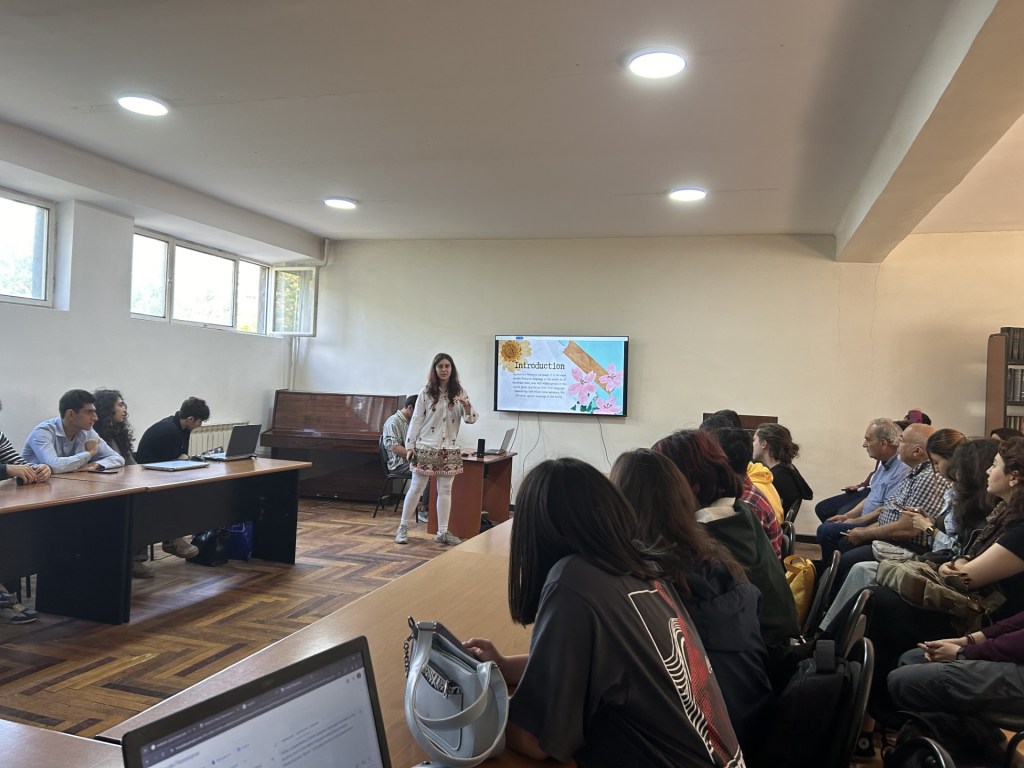
After introducing the meeting, the project team began to introduce the European languages individually. The students talked about the Irish language, which although many people think is similar to English or the Anglo-Saxon language branch, but on the contrary differs from it in alphabet, grammar, pronunciation and in general structure. But still, living in the neighborhood of a powerful state like Great Britain, the Irish have learned and are learning English, which is recognized as an international language.
The second language that Catherine introduced was German. He told about the branches of the language, which are many: Western, Eastern, Scandinavian. Interesting facts about that unique language and its impact on the world were presented.
Next was French, the language of love and romance. It was represented by Nane. French is one of the most popular and popular languages, it is said that French was spoken even in the Roman Empire. By the way, the latter is also considered a common language in diplomatic and bourgeoisie/aristocracy circles. In the 19th century, people used this language to communicate with each other. It was also important to hear about the influence of French on the whole world, for example through literature, song-dance, films.
The fourth was Italian, one of the most emotional and sensitive languages. Susie introduced Italian dialects and the alphabet.
Abel chose Finnish as the project study language, which, surprisingly, is not part of the Indo-European language family. It belongs to the Finno-Ugric language family. The interaction of these two language families was presented in an interesting way. The student presented his history, stages of development. The longest word in Finnish consists of 61 letters, and pronouncing it is really tricky.
Next on the list was Spanish with Narey’s performance. Spanish is the 4th most spoken language in the world, spoken by 500+ million people on a daily basis, and the number is growing every day. For example, in Mexico every year 1.2 million people learn and speak this beautiful language. By the way, it is really easy to learn. Spanish has 29 dialects. It is important that Spanish is the official language of about 20 countries. The longest word in Spanish consists of 33 letters and it is a type of phobia.
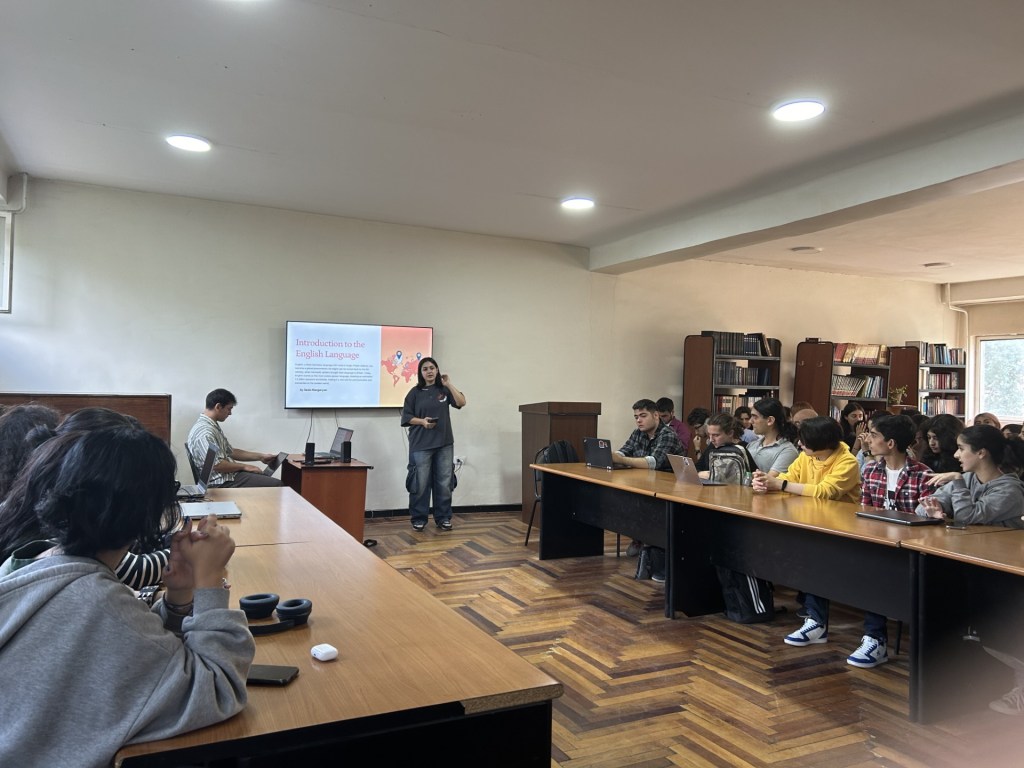
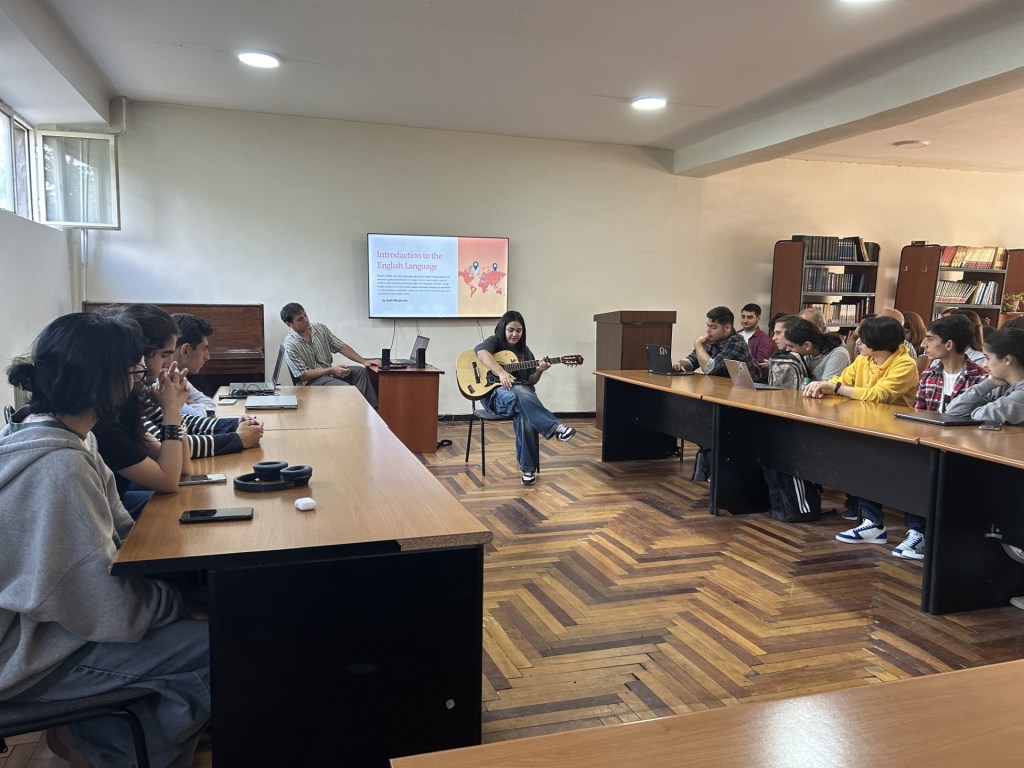
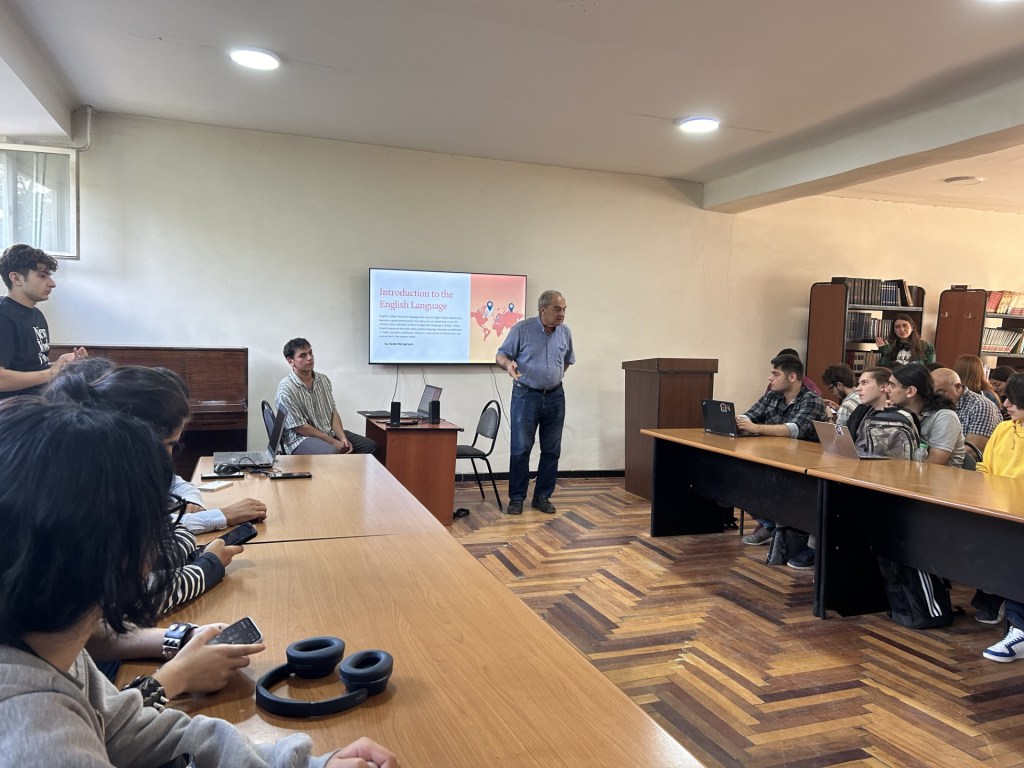
And as the conclusion of the design work, the world’s number one language, English, was presented. It was presented by Seda Margaryan, who also prepared a surprise song performance for the audience, accompanied by a guitar player. During the presentation, they talked about characteristics, language structure, importance and significance, internationality. Various sources testify that the most living language is English, because every 2 minutes a new slang or everyday word appears in that language. For example, in that language there is a word that defines the smell after the rain, but there are no words or phrases that express some simple meaning.
Thus, such works are very important, because they allow to do in-depth research, to penetrate the depths of that culture, to see how that language is born, lives and develops. This is how we get to know each other, each other’s culture and history, we are able to exchange interesting and educational facts and data, at least in long words. We thank the 12th grade English group, led by teacher Nune Aydinyan, for developing and successfully presenting such an important, interesting and educational project.
 Դավիթ Մուրադյան