
On January 17 of this year, within the framework of the winter camp, we visited the Office of the Human Rights Defender of the Republic of Armenia with a group of interested students of different ages, led by social scientist-teachers Vardan Karapetyan and Ashot Tigranyan.
You can learn more about the visit project and preparations on the coordinator’s blog.
You can read about my preparatory work by following the link.
Thus, after a long wait, we, a group of students from the high school-research college of the educational complex, were given the opportunity to visit one of the most important and cornerstone institutions of the Republic of Armenia, the Office of the Human Rights Defender. Upon arrival, we were greeted and received by the Head and employee of Department for Provision of Convention Mandates of the RA Human Rights Defender’s Office.
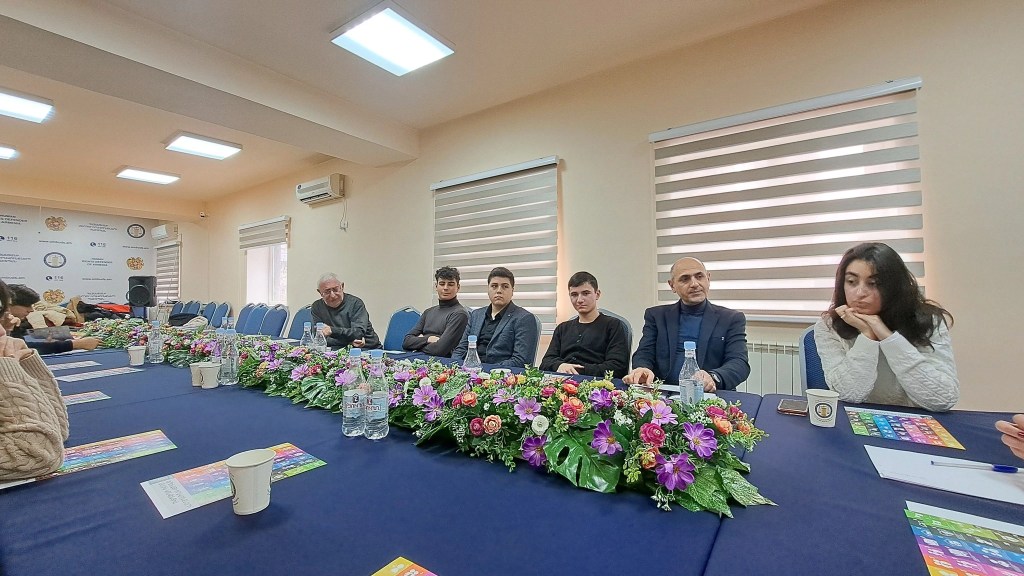
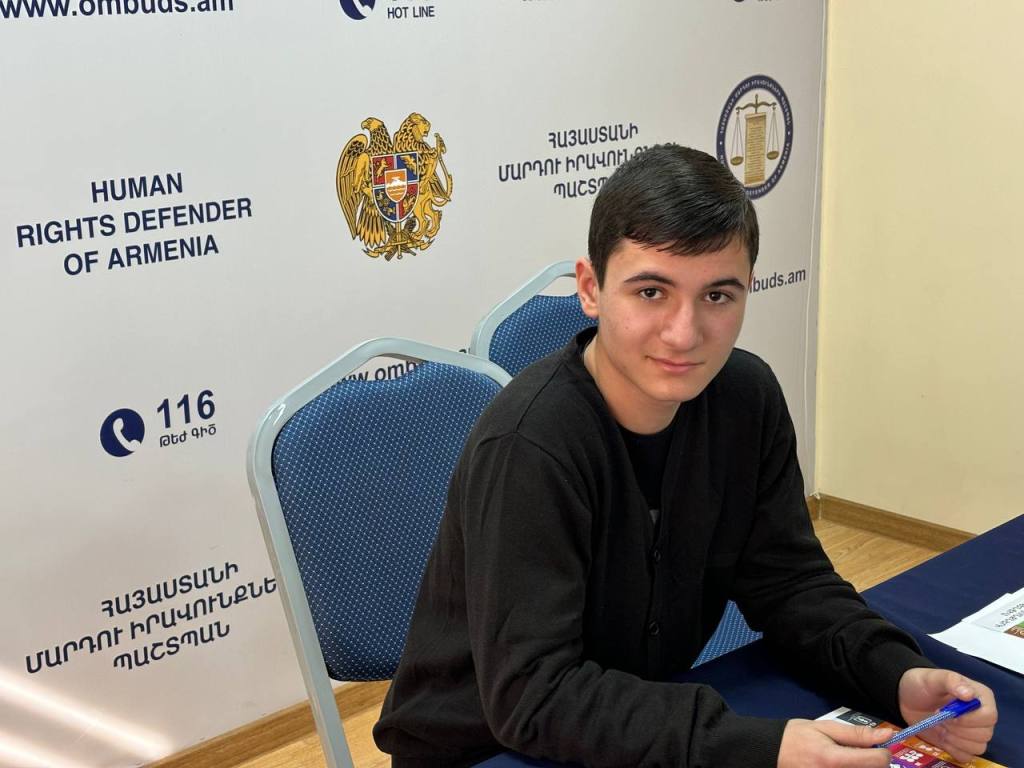
We started the discussion-conversation with a short presentation-acquaintance: each student (teacher) introduced himself for half a minute, told about his preferences, shared his future prospects, after which the actual conversation began, about the protection of human rights, and in particular, the rights of the child.
First of all, the students chose the one they liked or preferred from the information sheet on the rights of the child adopted by the global convention on the table, around which they wanted to have a discussion and conversation.
The majority of the students focused on the topics of child education, best interests, social and economic assistance, protection from exploitation, freedom of expression and respect for ideas and opinions. Special attention was paid to the protection of the rights of children with disabilities and special needs. The following was emphasized during the discussion: the goal is not to develop difference and discrimination, but to create equal opportunities.
It is interesting and noteworthy that many in society perceive the development and creation of special books, devices, and supports for people with disabilities as discrimination, that is, some believe that this violates the fundamental rights and freedoms of others. But let me note that in this way, on the contrary, equal conditions and opportunities are created for children of all groups. We are a state and live in a world where discrimination is no longer a reality, and every effort must be made so that people with special needs, and in particular children, feel not isolated from society, but full members of society. After all, every person has their own merits and talents, preferences and wishes, and in the development of the state and on the path to its establishment, a merit-based environment must be created for everyone, where everyone will treat each other with respect and, by combining efforts, will create a more prosperous, safe and secure state.
We also touched upon delinquent, convicted, imprisoned children and the protection of their rights. We talked about what crimes young people and adolescents are mainly convicted of, what tools and mechanisms are used to protect their rights in a dignified manner, what processes children go through, as well as what circumstances investigators and law enforcement agencies rely on to calculate the severity of the crime and determine the sentence, and of course, what activities the Office of the Human Rights Defender carries out in the context of all this.
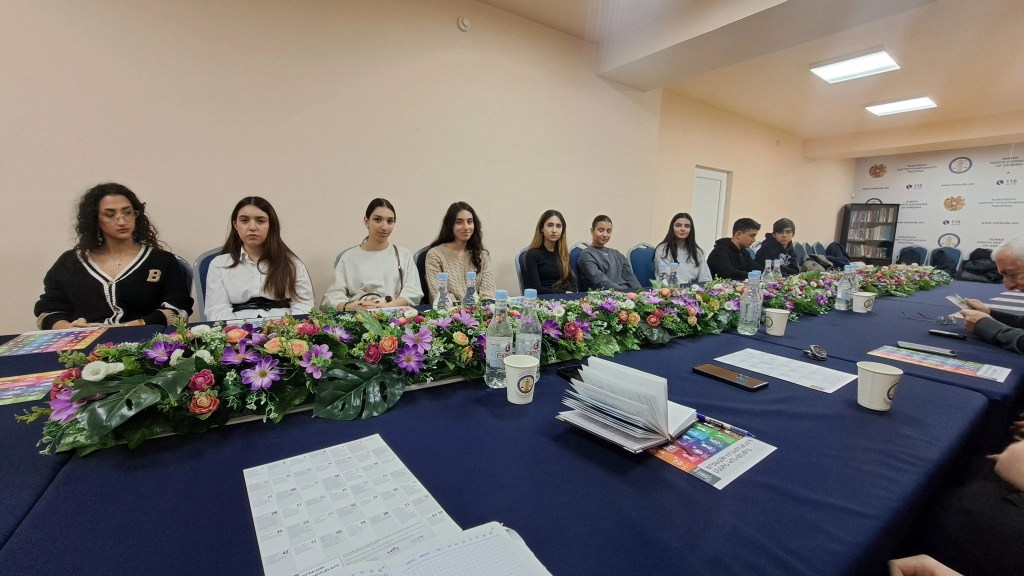
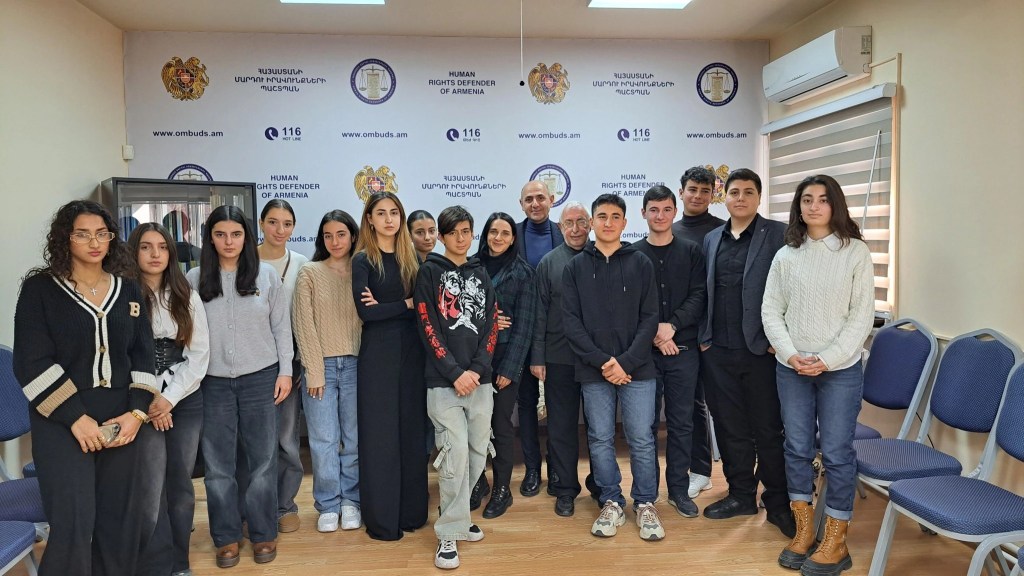
Summing up our diverse, multifaceted and fascinating discussion and conversation, an agreement was reached to expand cooperation on mutual visits, inclusion of students in educational programs, etc. Also, at the very end, we managed to exchange a few words with Ms. Manasyan personally and express our satisfaction and efficiency with the meeting.
 Դավիթ Մուրադյան