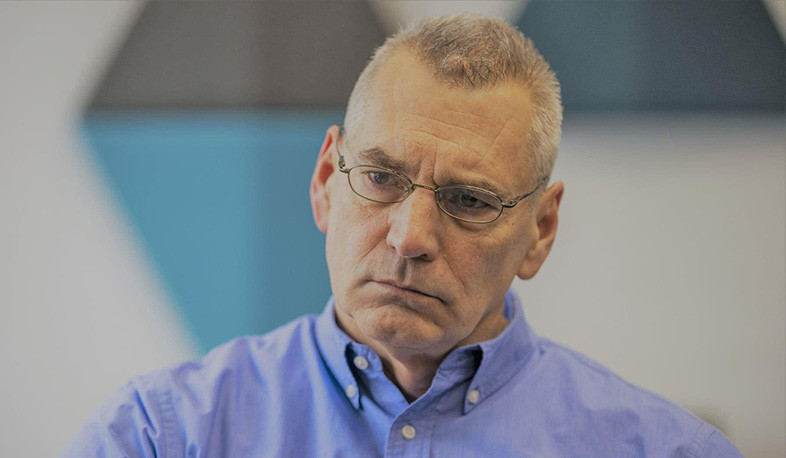
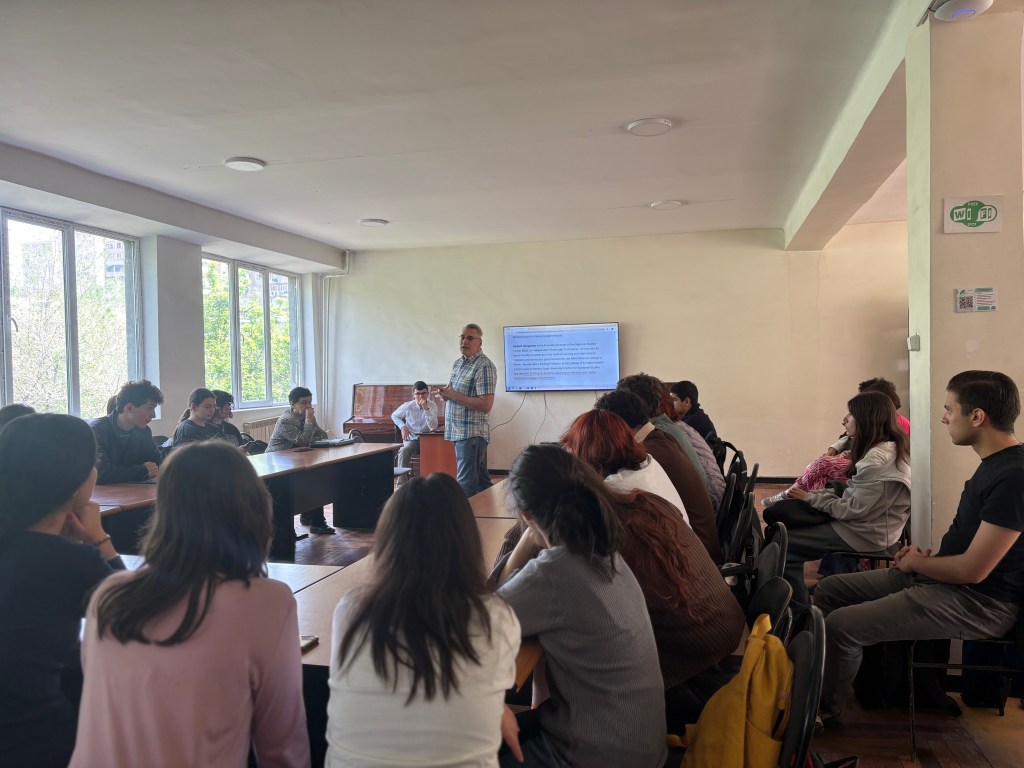
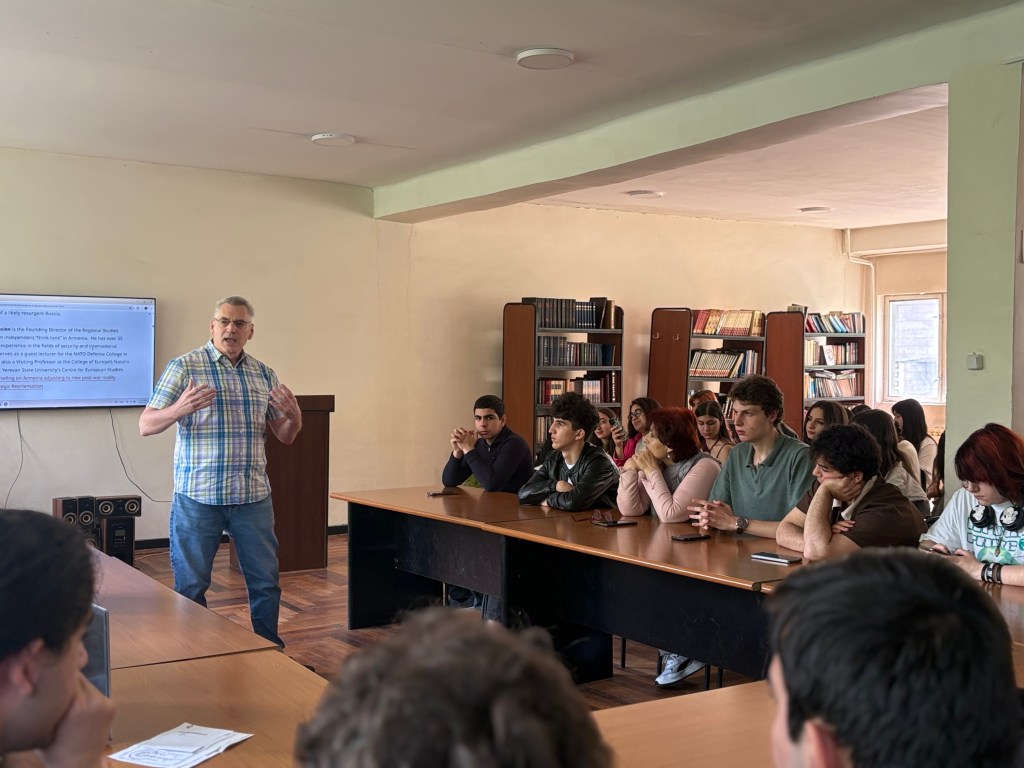
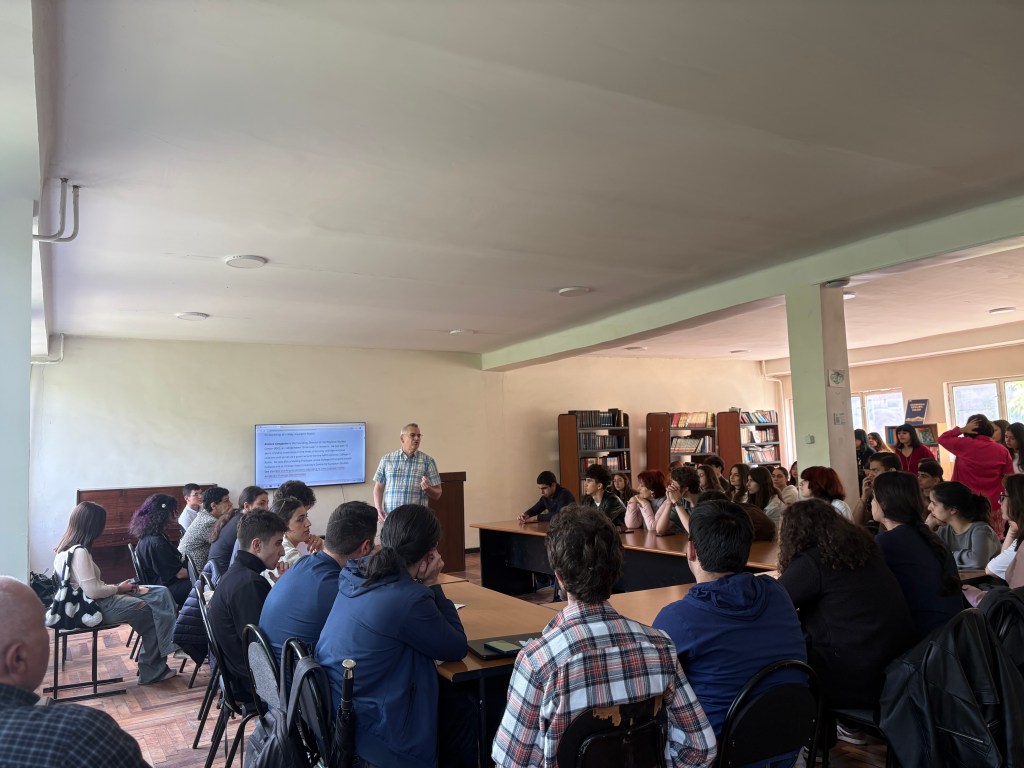
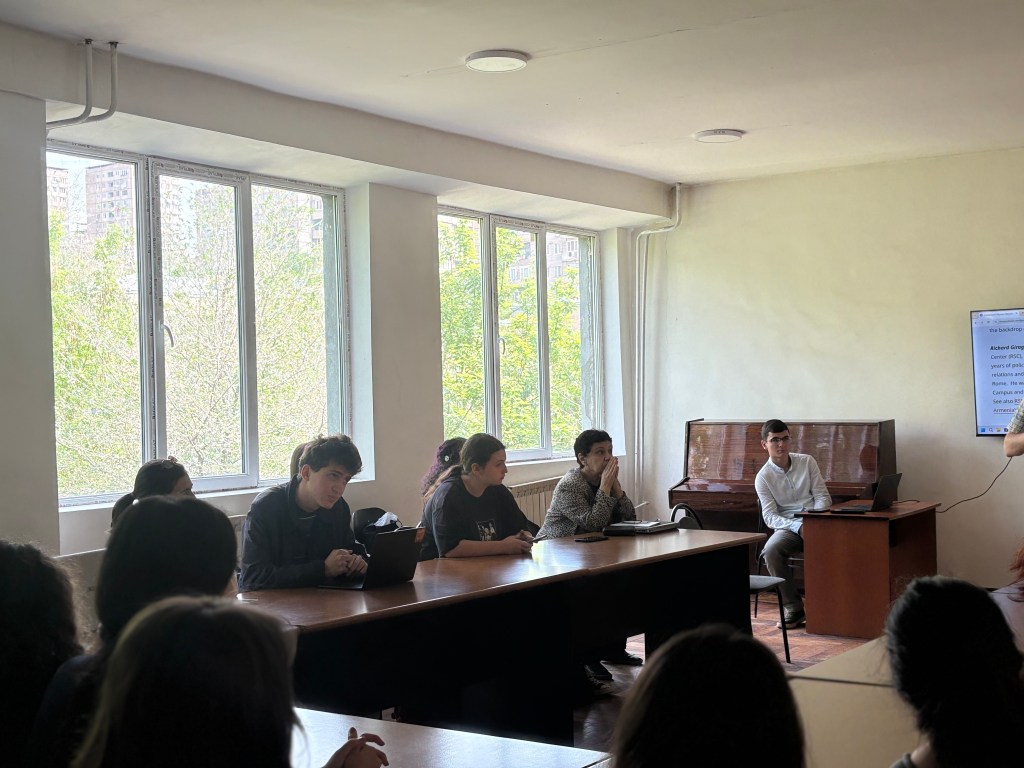
On April 28, at the initiative of English teacher Nune Aydinyan, a meeting-discussion on the topic “Armenia’s New Post-War Strategy” was organized in the reading room of the research college with Richard Giragosian, the founding director of the independent analytical Regional Studies Center (RSC) operating in Armenia. The discussion was attended by middle and high school students of various ages, social science teachers, college students, and other interested parties.
Learn more about the project and purpose of the meeting on the coordinator’s blog.
Speaker’s biography below:
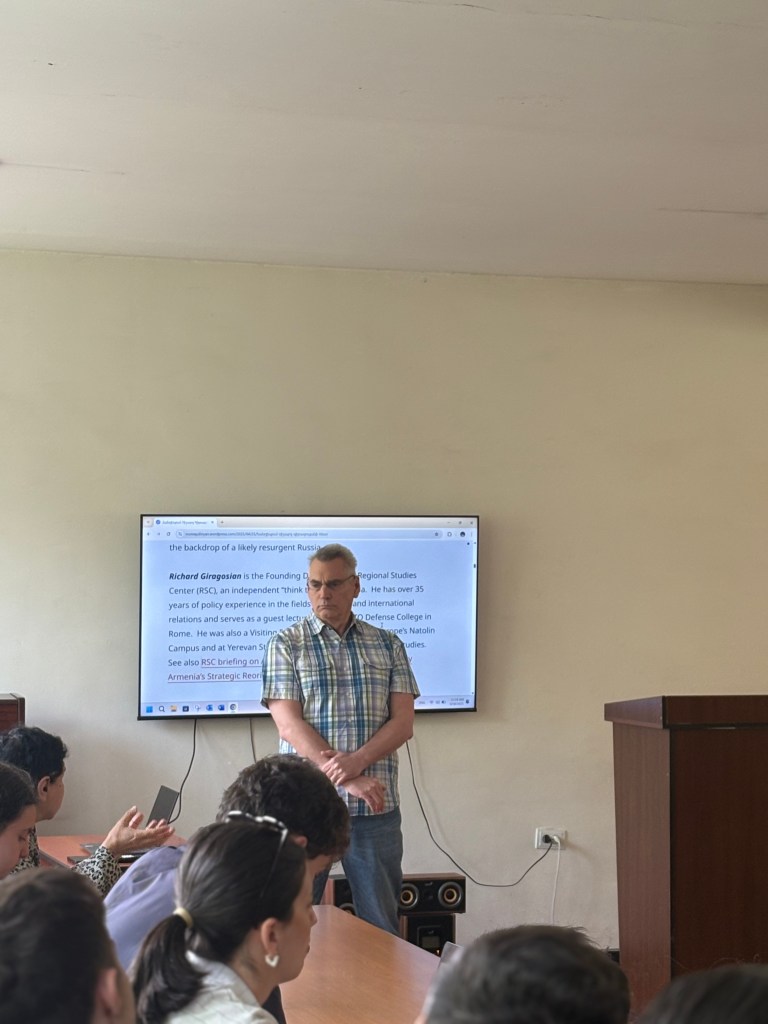
Richard Giragosian is the Founding Director of the Regional Studies Center (RSC), an independent think tank based in Armenia. He has over 35 years of experience in security policy and international relations. He is a visiting lecturer at the NATO Defense College in Rome and has taught at the Natolin Campus of the College of Europe in Warsaw and at the Center for European Studies at Yerevan State University.
Nune Aydinyan made an opening speech, briefly introducing the speaker of the day and the relevance of the topic of discussion, after which Mr. Giragosian gave an introductory speech. Our guest spoke about the importance of discussing such topics in today’s reality, emphasizing the special role of youth in strengthening and developing the future of Armenia.
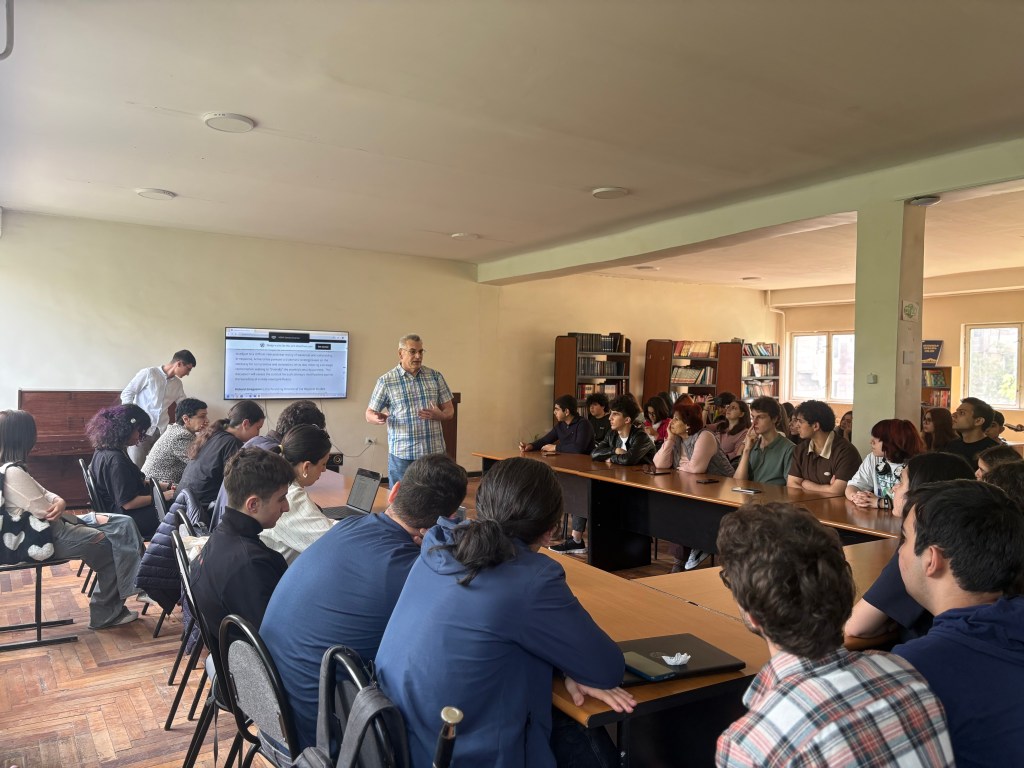
Speaking about the new post-war situation, the analyst once again emphasized the unique role of our state in the context of regional communications, as a historically formed link and crossroads of civilizations. He also touched upon the development of strategically important multi-layered and multi-sectoral cooperation with neighboring states, which, in addition to the country’s economic rise, also affects the increase in the level of internal stability.
Interested students regularly asked Mr. Giragosian questions related to the recent Armenian-Azerbaijani negotiations, a possible new war, Turkey’s involvement in the processes and the conduct of peace negotiations with the latter, regional players and stakeholders, the readiness of the Armenian side to join the European Union and its realism in the current context, the situation within Armenia in both political, economic, and social aspects, changes in the world order expected in the near future, Russian-American relations, the impact of the Russian-Ukrainian war on the region, the deployment and activities of an international peacekeeping observation mission along the borders, and a number of other topics.
As we can see, our discussion was not limited to one or a few topics: dozens of current and important topics were touched upon during the meeting. The analyst gave very detailed answers to all questions, trying to explain the current situation and the government’s further steps and strategy as clearly as possible.
Separate topics of discussion included the upcoming parliamentary elections, the RA government’s “Crossroads of Peace” project and its goal, the circulating “Real Armenia” ideology and its projection on society, etc.
At the end of the meeting, Mr. Giragosian was presented with and presented with the “Sebastatsi” wine on behalf of the “Mkhitar Sebastatsi” Educational Complex.
I must specifically state that such meetings are an extremely important way for speakers and learners to get to know each other’s opinions and positions, to think about the future together, to make plans, and why not also to develop cooperation between institutions in the future. I attach great importance to such events, because I am convinced that by listening to and understanding each other today, we will be able to build a more dignified and strong state tomorrow, based on mutual respect and trust, hard work, and patriotism.
I express my deep gratitude to the organizer of the meeting, Ms. Aydinyan, for her important initiative, and to Mr. Giragosian for conducting an interesting and productive discussion.
 Դավիթ Մուրադյան