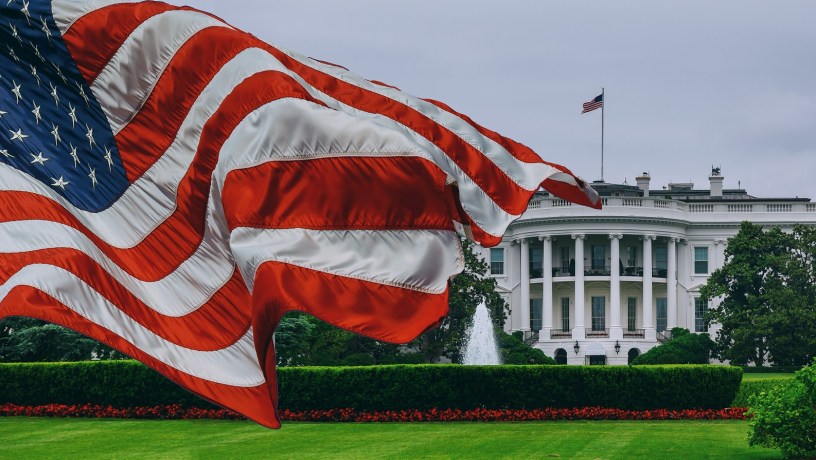
“In God We Trust”
The Official Motto of the United States of America
The head of state in the United States is expected to serve a dual role: as both the ceremonial symbol of the nation (Head of State) and the active political leader of the executive branch (Head of Government). U.S. Presidents have proved the immense power and influence of this combined role, demonstrating both the capacity to effect significant change and the constraints of a system designed with checks and balances.
In North America the title of president was first used for the chief magistrate of some of the British colonies. These colonial presidents were always associated with a colonial council to which they were elected, and the title of president carried over to the heads of some of the state governments (e.g., Delaware and Pennsylvania) that were organized after the start of the American Revolution in 1776. The title “President of the United States” was originally applied to the officer who presided over sessions of the Continental Congress and of the Congress established under the Articles of Confederation (1781–89). In 1787–88 the framers of the new country’s Constitution created the vastly more powerful office of the presidency of the United States. The president was vested with a variety of duties and powers, including negotiating treaties with foreign governments, signing into law or vetoing legislation passed by Congress, appointing high-ranking members of the executive and all judges of the federal judiciary, and serving as commander in chief of the armed forces.
It’s not a secret that the President, as the head of the executive, has a lot of power. Article II of the US Constitution defines the powers the President can use without congressional approval and those where congressional approval must be sought.
“The executive Power shall be vested in a President of the United States of America. He shall hold his Office during the Term of four Years, and, together with the Vice President, chosen for the same Term, be elected, as follows
Each State shall appoint, in such Manner as the Legislature thereof may direct, a Number of Electors, equal to the whole Number of Senators and Representatives to which the State may be entitled in the Congress: but no Senator or Representative, or Person holding an Office of Trust or Profit under the United States, shall be appointed an Elector”.
According to the 20th Amendment to the Constitution, a President’s term of office begins at 12:00 p.m. (noon) on January 20th of the year following an election. To assume his or her duties, the President-elect must take the Oath of Office as stated in Article II, Section I , Clause 8 of the Constitution:
Before he enter on the Execution of his Office, he shall take the following Oath or Affirmation: – “I (name-surname) do solemnly swear that I will faithfully execute the office of President of the United States, and will to the best of my ability, preserve, protect and defend the Constitution of the United States. So help me God”.
Let’s record: The Constitution does not say what the swearing-in must include. While most Presidents-elect chose a Bible, as George Washington did, John Quincy Adams used a book of law, and Teddy Roosevelt did not use any book.
Special recording: As we can see, the phrase “so help me God,” which is included in the text of the official presidential oath, characterizes the tendency of the American people and authorities to follow spiritual and religious values, to combine physical power with spiritual power. It is another question whether this is always the case.
The Vice President’s oath may be administered by the retiring Vice President, by a member of Congress, or by some other Government official, such as a justice of the Supreme Court. The Vice President’s oath is as follows:
“I do solemnly swear that I will support and defend the Constitution of the United States against all enemies, foreign and domestic, that I will bear true faith and allegiance to the same: that I take this obligation freely, without any mental reservation or purpose of evasion, and I will well and faithfully discharge the duties of the office on which I am about to enter. So help me God.”
It is an accepted rule that after the president takes the oath of office, the national anthem of the given country is performed, but in the United States, which is already a century since the election of the US president, the performance of the composition “Hail to the Chief” is a mandatory component of the inauguration ceremony, which is another characteristic symbol of the US presidential institution, but also different from the cultures and general rules of other countries. This case once again proves the idea of the president as endowed and chosen, “navigator” and leader.
“Hail to the Chief,” with its preceding fanfare Ruffles and Flourishes, is traditionally played to announce the arrival of the president at official functions. The melody was based on an old Gaelic air, and adapted from Sir Walter Scott’s poem, The Lady of the Lake. “Hail to the Chief” is attributed to English composer James Sanderson. The song was already very popular when the Marine Band played it at the laying of the cornerstone for the first lock of the Chesapeake and Ohio Canal on May 29, 1829, in the presence of President Andrew Jackson. This was the first documented performance of the song for a sitting president. Two first ladies are credited with using Hail to the Chief to announce the arrival of the president at an official event—Julia Tyler and Sarah Polk. In 1954, the Department of Defense created an official policy that made “Hail to the Chief” a tribute to the President of the United States.
The song’s playing accompanies the appearance of the president of the United States at many public events; it is also played at inauguration ceremonies. For major official occasions, the United States Marine Band and other military ensembles are generally the performers, so directives of the United States Department of Defense have, since 1954, been the main basis for according it official status. It is preceded by four ruffles and flourishes when played for the president. The song is also played during a former President’s state funeral after the casket is removed from the hearse. Due to its age the song is in the public domain. The text of the song below:
Hail to the Chief we have chosen for the nation,
Hail to the Chief! We salute you, one and all.
Hail to the Chief, as we pledge cooperation,
In proud fulfillment of a great, noble call.
Yours is the aim to make this grand country grander,
This you will do, that is our strong, firm belief.
Hail to the one we selected as commander,
Hail to the President! Hail to the Chief!
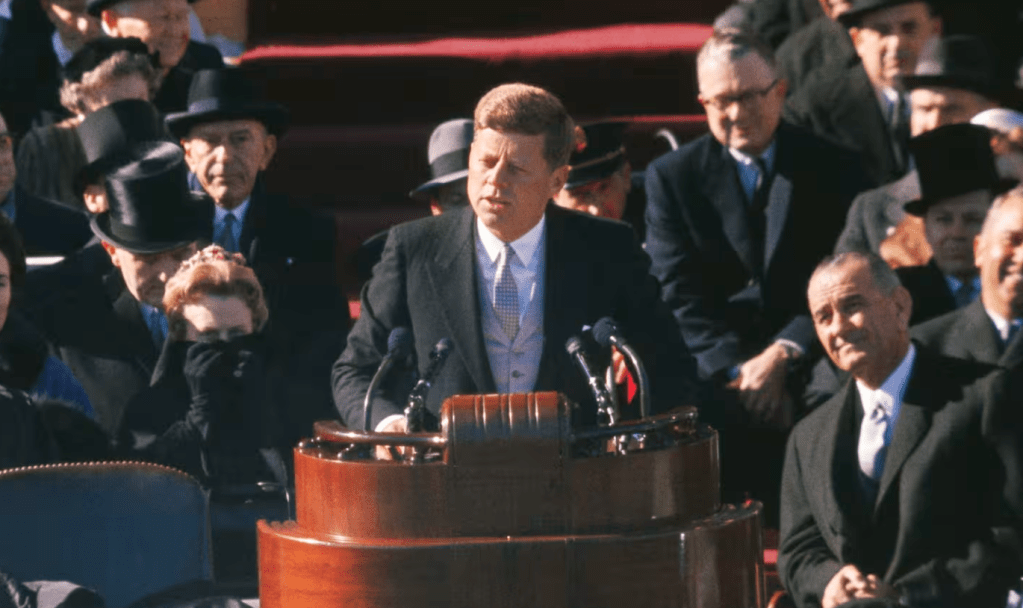
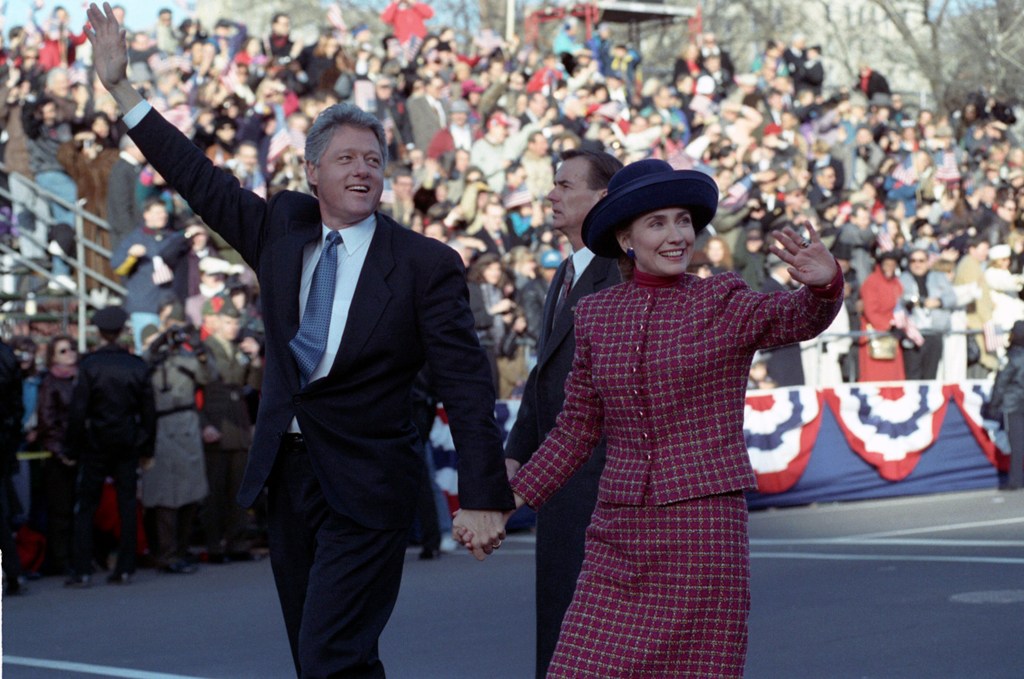

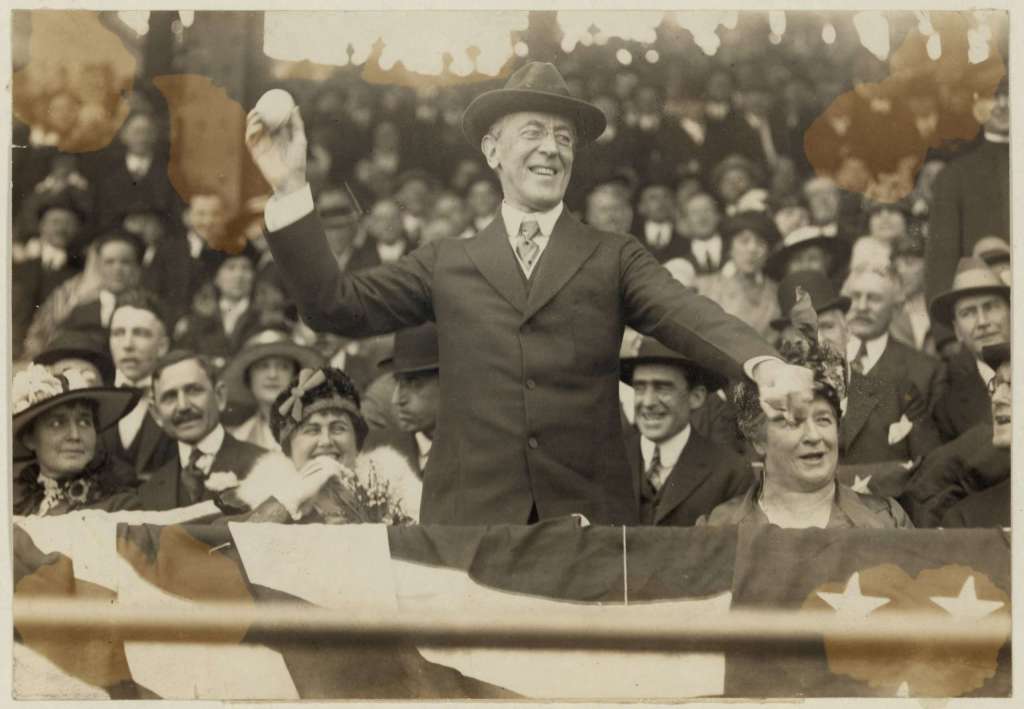
The above clearly shows what a key role the presidential institution plays, what values it adopts, what priorities it sets. The US president, of course, is not an ordinary person, he is an individual who has the opportunity to influence the solution of global issues. He is the heaviest weight in the world, and at least this circumstance alone makes him respect and honor. For the American people, the adoption of the presidential institution was a turning point, because it made it possible to consolidate democratic principles, giving the people the right to freely choose their leader. The presidential institution stands as an anti-imperialist symbol, which the founding fathers and the American people fought against in the 1780-1820s.
And in modern times, the presidential institution is not as understandable, imaginable and acceptable in the rest of the world as it is in the United States. And that’s why the president becomes the most important figure in the culture and history of your country, and despite his shortcomings (in the cases of Bill Clinton, Richard Nixon), he is still one of the most serious and influential figures in history, and continues to enjoy great respect even after leaving office.
Interesting and fun facts about US presidents (the opposite side of the office)
- George Washington’s (#1) dentures were not made of wood, but rather of ivory, gold, and human and animal teeth, among other materials.
- John Adams (#2) and Thomas Jefferson (#3) both died within hours of each other on the 50th anniversary of the Declaration of Independence in 1826.
- James Madison (#4), the father of the Constitution, was only 5 feet, 4 inches tall and weighed less than 100 pounds.
- James Monroe (#5) was the first president to have an outdoor inauguration in Washington, D.C., which was held on the site of the current Supreme Court building.
- John Quincy Adams (#6) only agreed to speak with Anne Royal, the first woman to interview a president, after she commandeered his clothes during one of his daily baths in the Potomac River.
- Andrew Jackson (#7) was the first of seven presidents born in a log cabin.
- Martin Van Buren (#8) owned two tiger cubs as pets, which were given to him as gifts from the Sultan of Oman.
- William Henry Harrison (#9) delivered the longest inaugural address in history, a 105 minute speech without a hat or overcoat, on March 4, 1841. After developing pneumonia, he died in the White House exactly one month later, becoming the first president to die in office.
- John Tyler (#10) was the first president to have a veto overridden.
- James Polk (#11) was the first president to retire after one term and not seek reelection.
- Zachary Taylor (#12) is the only president whose remains were exhumed when a medical examiner tested for poisoning in 1991. After reviewing the results, the examiner determined that the arsenic levels were several hundred times less than they would have been if the president had been poisoned.
- Millard Fillmore (#13) refused an honorary degree of Doctor of Civil Law from Oxford, saying, “No man should accept a degree that he cannot read.”
- Franklin Pierce (#14) was the first president to cancel the inaugural ball, due to the death of his son.
- James Buchanan (#15) is the only president who never married. His niece performed the role of White House hostess while he was in office.
- Abraham Lincoln (#16) was the only president to obtain a patent. In 1849, he invented a complicated device for lifting ships over dangerous shoals by means of “buoyant air chambers.” Much to his disappointment, U.S. Patent No. 6,469 was never put into practical use.
- Andrew Johnson (#17) was buried with his head resting on a copy of the Constitution.
- Ulysses S. Grant (#18) was born Hiram Ulysses Grant, but changed his name because he did not like his monogram, HUG.
- Rutherford B. Hayes (#19) held the first Easter egg roll on the White House lawn.
- James Garfield (#20) was the first presidential candidate to spend more than one million dollars on his campaign.
- Chester Arthur (#21) was the first president to take the presidential Oath of Office in his own home, located on Lexington Avenue in New York City.
- Grover Cleveland (#22 & #24) personally answered the White House phone.
- Benjamin Harrison (#23), the first president to have electricity in the White House, once got an electrical shock, leading his family to often refuse to touch the light switches and sometimes leave the lights on at bedtime.
- William McKinley (#25) was the first president to use campaign buttons.
- Theodore Roosevelt (#26) set what was then the world record for the most handshakes in one day with 8,513 handshakes at a White House reception on January 1, 1907.
- William Howard Taft (#27) started the tradition of the president throwing out the first pitch of the baseball season at a Washington Senators game on April 14, 1910.
- Woodrow Wilson (#28) is the only president buried in Washington, D.C. (at the National Cathedral).
- Warren Harding (#29) was the first president to visit Alaska and Canada.
- Calvin Coolidge (#30) was the only president sworn in by a former president, Chief Justice William Howard Taft.
- Herbert Hoover (#31) refused to accept a salary for his presidency and gave all of his federal paychecks to charity.
- Franklin Roosevelt (#32) was a devoted stamp collector who kept up his hobby while in office.
- The middle initial ‘S’ in Harry Truman’s (#33) name is not an abbreviation and does not stand for another name.
- Dwight Eisenhower (#34) was an avid golfer who installed a putting green on the White House lawn.
- John F. Kennedy (#35) was the first person born in the 20th century to become president.
- Lyndon B. Johnson (#36) graduated from high school at the age of 15.
- Richard Nixon (#37) was the first president to visit all 50 states.
- Gerald Ford (#38) was the longest living president.
- James Carter (#39) was the first president to use his nickname, “Jimmy,” while being sworn into office.
- Ronald Reagan (#40) appeared in 53 Hollywood movies from Love is on the Air (1937) to The Killers (1964).
- George H.W. Bush (#41) was the only president to serve as United States Ambassador to the United Nations.
- William J. Clinton (#42) was the first president to have been a Rhodes Scholar.
- George W. Bush (#43) was the first to follow his father as president since John Quincy Adams in 1824.
- Prior to becoming the first African American president, Obama (#44) won two Grammy Awards for “Best Spoken Word Album.” His wife, Michelle, has likewise won a Grammy.
- Before becoming president, Trump (#45) was a real estate developer, entrepreneur and host of the NBC reality show, “The Apprentice.”
- Biden (#46) overcame a debilitating childhood stutter after enduring bullying over the condition in grade school.
Once in the White House, each president made his mark in different ways. In fact, before Theodore Roosevelt came to office in 1901, the White House wasn’t even called the White House! People called the building the President’s Palace, the President’s House, and the Executive Mansion. Roosevelt officially named it the White House.
Teddy Roosevelt was the first president to ride in a car while in office. His fifth cousin and the 32nd president, Franklin Delano Roosevelt, was the first to ride in an airplane.
The 18th president of the United States, Ulysses S. Grant, was given a $20 speeding ticket for riding his horse and buggy too fast down a street in Washington, D.C.
The Fourth of July is a date on which three presidents died – John Adams and Thomas Jefferson (both in 1826) and James Monroe (1831). It is also the birthday of one president: Calvin Coolidge in 1872.
As a good will gesture toward the United States, Soviet Premier Nikita Khrushchev gave First Lady Jacqueline Kennedy a dog named Pushinka, which means “fluffy” in Russian. She was the daughter of Strelka, a Russian dog sent to space by the soviets.
A White House staff member, Charles Reeder, once snuck Algonquin, a pony that belonged to Theodore Roosevelt’s children, up the White House elevator to visit Archie Roosevelt while he was sick in bed with the measles.
Nearly every president from Abraham Lincoln to William Howard Taft sported some form of facial hair. The exceptions to these were Andrew Johnson and William McKinley.
Patriotism is easy to understand in America. It means looking out for yourself by looking out for your country.
~Calvin Coolidge, 1923
Conclusion:
So, this interesting, and somewhat remarkable, study proved how important the position of the US president is on the one hand, and how unpredictable it is on the other. Various presidents have gradually, one after the other, shaped the formula of American society and statehood, transformed the White House and its interior, and left behind funny and fascinating stories. By getting to know them, we can to some extent get to know America, that amazing country and culture.
List of references:
- https://www.britannica.com/topic/president-government-official
- https://constitution.congress.gov/constitution/article-2/
- https://www.bbc.co.uk/bitesize/guides/zryrqp3/revision/4
- https://en.wikipedia.org/wiki/Hail_to_the_Chief
- https://www.whitehousehistory.org/the-united-states-marine-band-hail-to-the-chief
- https://constitutioncenter.org/media/files/pres_funfacts.pdf
- https://kids.nationalgeographic.com/history/article/presidential-fun-facts
- https://www.history.com/articles/us-presidents-facts
- https://www.whitehousehistory.org/questions/what-are-some-interesting-facts-about-presidents-first-ladies
 Դավիթ Մուրադյան