
EASTER
THE MEANING OF EASTER
Easter is a Christian festival which marks the resurrection of Jesus Christ. For many Christians, Easter is a celebration of the triumph of life over death, and a very important time of the year. Many non-Christians also have a holiday at this time, so it is a popular time to travel or spend with friends and family. We see lots of symbols of new life at Easter, especially eggs, chicks, flowers and rabbits. These symbols go back to ancient pagan traditions which celebrated fertility, rebirth and new growth after the long, winter months.
WHEN IT IS CELEBRATED
The dates of Easter change from year to year, but it usually falls sometime between the end of March and the end of April. In Western Christianity, Easter Sunday is the first Sunday after the first full moon of spring, which starts on 21 March. The Eastern Orthodox churches, which use a different calendar, have a slightly different way of calculating Easter and usually celebrate Easter a little earlier or later.
HOW EASTER IS CELEBRATED
In many countries there are religious processions during Holy Week, and practicing Christians attend special church services. On Palm Sunday, many churches bless palm branches and people put them on the ground during processions to mark the day that Jesus arrived in Jerusalem. The Last Supper on Maundy Thursday is celebrated in many Christian traditions in the form of the Communion, when believers share bread and wine. Good Friday is traditionally a day of fasting, reflection and sadness. A lot of church services start at midnight the night before Easter Sunday with the lighting of candles or, in Greece, fireworks. This represents the triumph of light over darkness. On Easter Sunday, churches are filled with flowers representing new life, and at home chocolate Easter eggs are given as presents.
Easter in Ukraine, Czech Republic, Hungary, Poland, Slovakia
Across central and Eastern Europe an ancient tradition exists which sees people try to drench each other with water buckets of water, usually men soaking the women, on Easter Monday.
Known as Smigus-dyngus (Wet Monday) in Poland, Watering Monday in Ukraine, Watering in the Czech Republic and Slovakia and Sprinkling in Hungary, the ritual is supposedly based around women’s’ fertility, with the water having a cleansing effect in an effort to make them healthy for the upcoming spring.
In Hungary, participants will often dress up in folk costumes and the men will douse the women with buckets of water or perfume. In Poland, traditionally the women get soaked, but today it has become more of a country-wide water fight. After the soaking, usually the women then provide the men with food and alcohol. Another Easter tradition exists in these countries, in which men whip women with a special handmade whip made from willow and decorated with ribbons. Not intended to be painful, it supposedly helps women keep their youth, health and fertility throughout the year.
What Do People Do?
Easter is known as Velykden (The Great Day) and is a day off work in Ukraine. Special Easter services are held in churches, and many families celebrate the day with a special Easter meal. Easter meals often include the Paskha (a type of Easter bread) and an egg painted in red.
An Easter basket is filled with Paysinki (decorated eggs) and blessed early on Easter Day in many homes. There are various Easter games, including one called “Knocking”. This game involves 2 players who have 1 egg each and try to knock each other’s eggs. The first one to have their egg broken loses the game.
Public Life
Easter Day is a national public holiday in Ukraine so many shops, museums, and libraries, as well as government offices and educational institutions are closed. The Monday after Easter Sunday is a public holiday, so people can have a day off work and school. This rule applies to all public holidays that fall on a Sunday in Ukraine.
Symbols
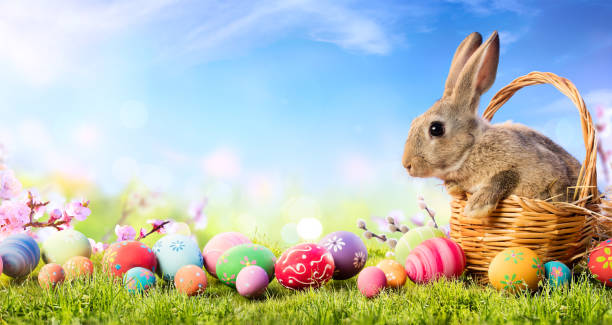
The pysanky (decorated raw eggs) are part of the Easter Day celebrations in Ukraine. The names and meanings of the pysanky designs vary across regions. According to one superstition, pysanky were meant to protect homes from evil spirits and misfortune.
 Դավիթ Մուրադյան